1. I Have Eyes 2026
2. HIDE AND SEEK 2025
3. VIOLENT GREEN 2024 - 2025
4. COLOR, THE MEMORY OF SADISM 2020 - 2023
5. MEMORIAL MORTIES 2019
6. PRINTMAKING WORKS 2013 - 2018
7. ILLUSTRATION WORKS 2018 - 2019
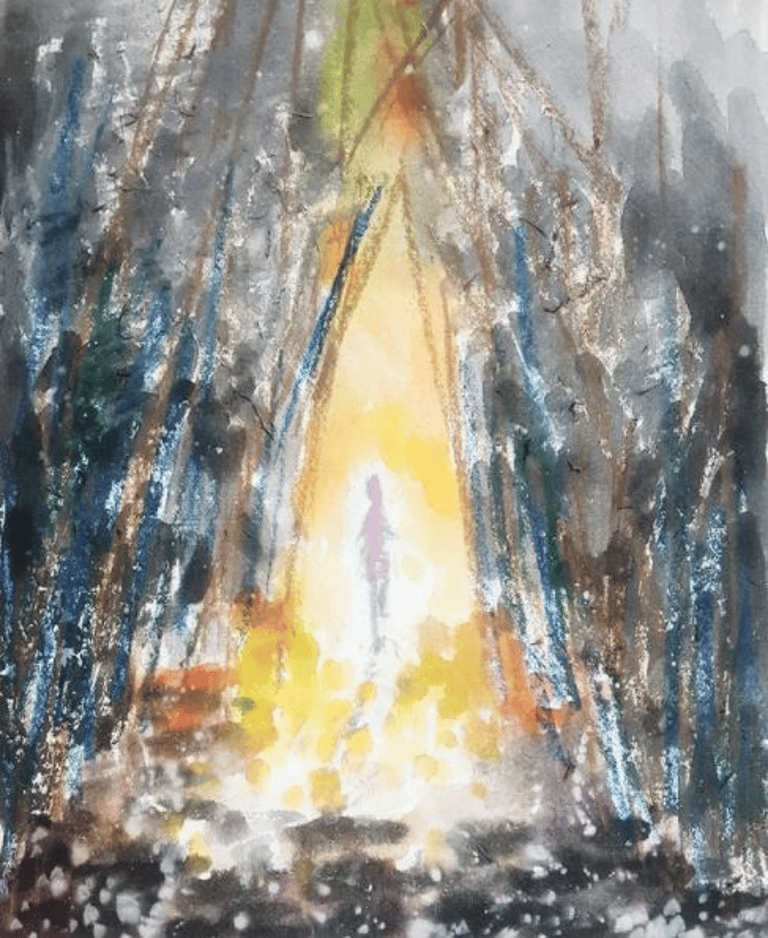
I Have Eyes
I Have Eyes
2026
Tromsø
(The project will be further developed into a publication)
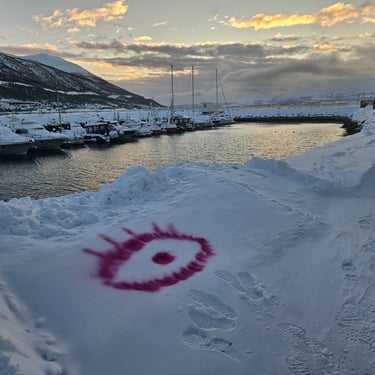
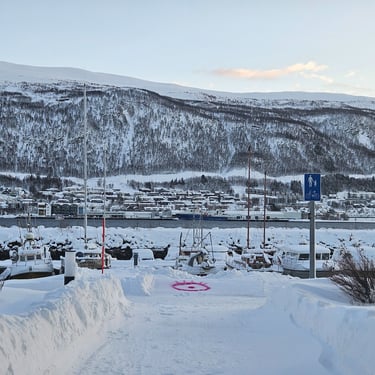
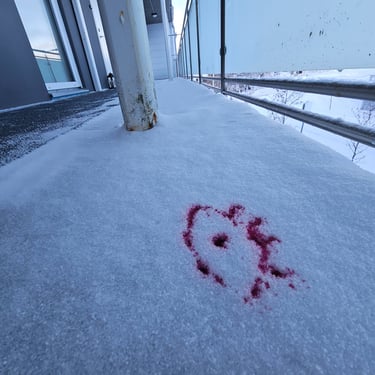
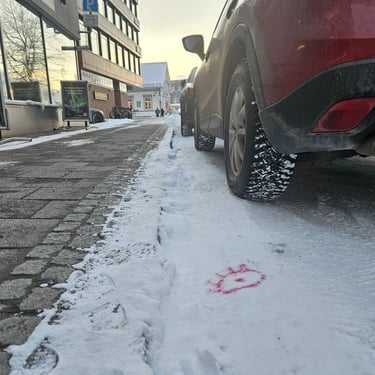
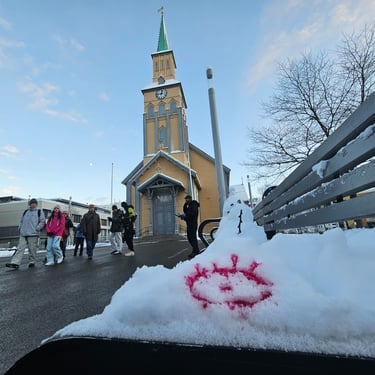
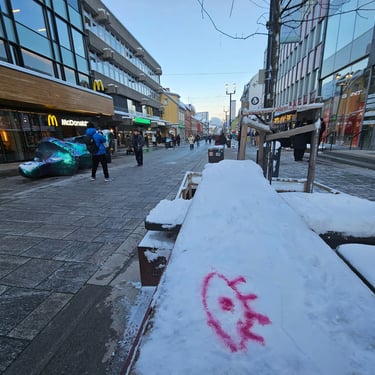
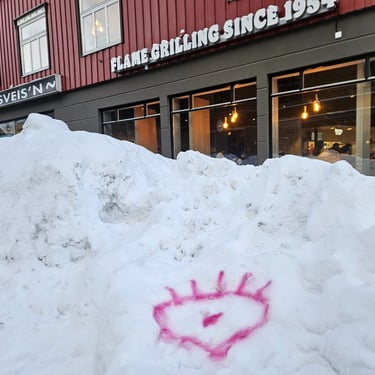
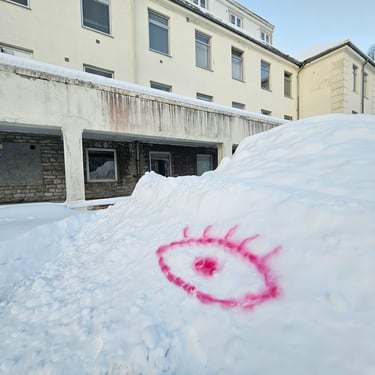
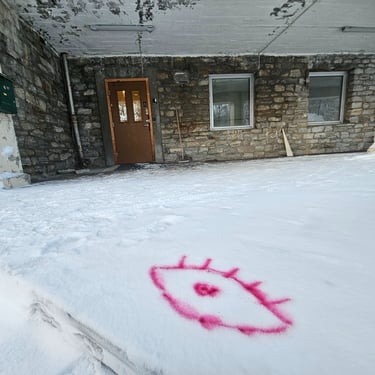
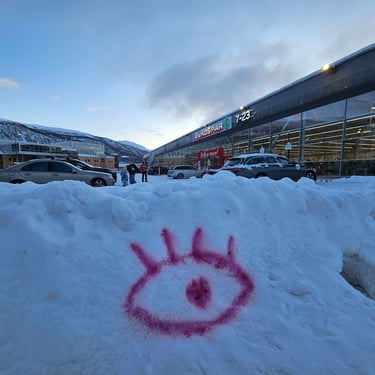
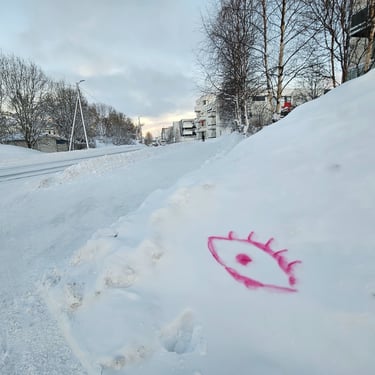
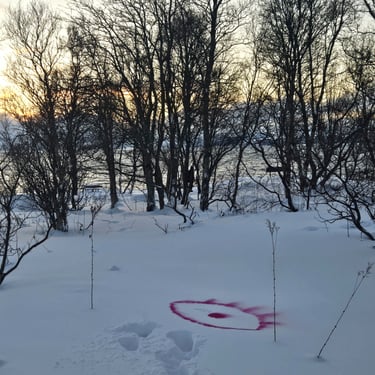
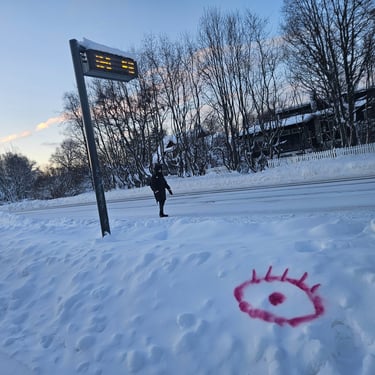
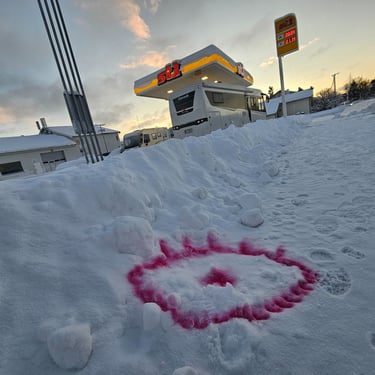
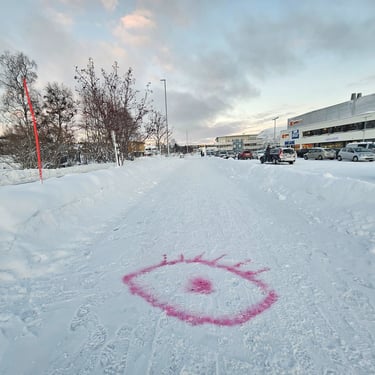
At each location where I experienced racialized gaze and inappropriate flirtation, I returned to mark the ground with a simple sign: an eye-shaped form with a single center point.
The 《Gaze Mark》 does not identify perpetrators or narrate events; it marks the residue of having been seen without consent.
The locations ranged from my apartment building and a local grocery store to my workplace, and even the space beside the car shared with my partner.
Despite the personal nature of these sites, the interventions were carried out cautiously, to be environmentally safe, avoiding disruption to traffic and visible discomfort to others.
Rendered in beet juice on snow, the symbol exists only temporarily, subject to weather, time, and erasure.
Its disappearance echoes the fragile status of microaggressions—experiences that are often minimized, normalized, or left without witnesses.
By placing these marks across multiple sites, the work maps a quiet but persistent geography of racialized visibility.
Hide and Seek
Hide and Seek
Project Description
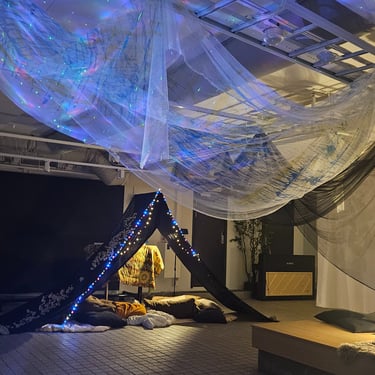
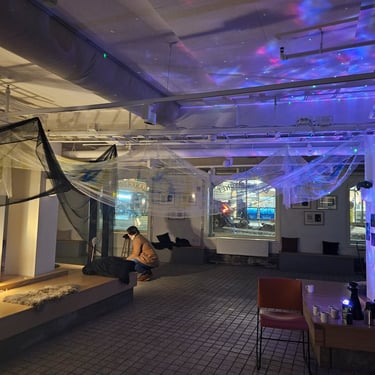
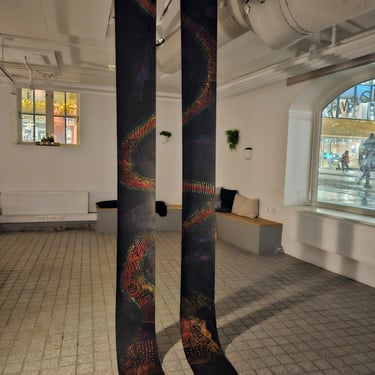
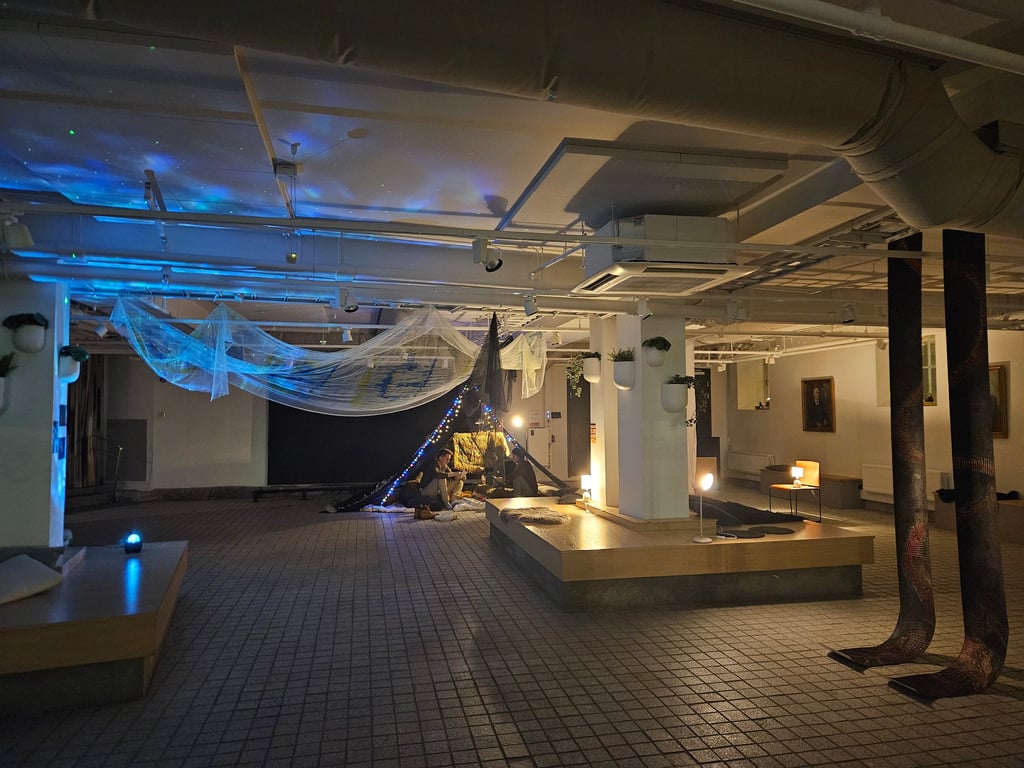
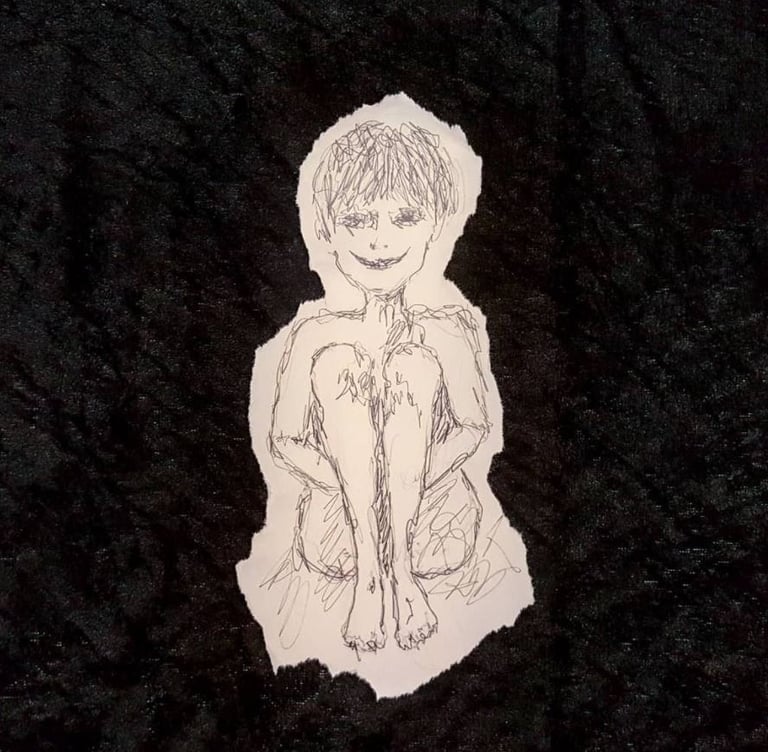
Hide and Seek is a collaborative installation between artistic and psychological approaches, inviting audiences to confront their inner child through fabric collage, painting, and immersive play.
Created by artist Hakkyung Son (b. 21.08.1993) and psychologist Torbjørn Jachlin Giæver (b. 23.09.1996), the project emerges from our shared need to face personal trauma and reconnect with the inner child in new ways. While deeply personal, it expands beyond our individual experiences to transform private wounds into a shared and universal aesthetic encounter.
The collaboration began as a mutual offering. Torbjørn, a licensed psychologist, sought a way to express his inner struggles beyond words, while I wished to gain a psychological perspective on my own experiences of trauma. In designing the project for each other, we found a meeting point where art and psychology could merge through metaphor, space, and play.
As the visual artist, I lead the project’s artistic direction, production, and exhibition. Yet the collaboration is essential: it is a dialogue between my practice of fabric collage and his painting-based installation, between artistic expression and psychological insight. Together, we create an environment where trauma is not explained but embodied—where emotion becomes tactile and visible.
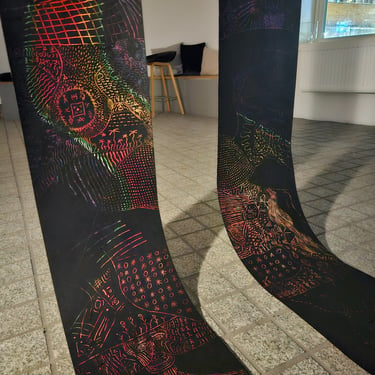
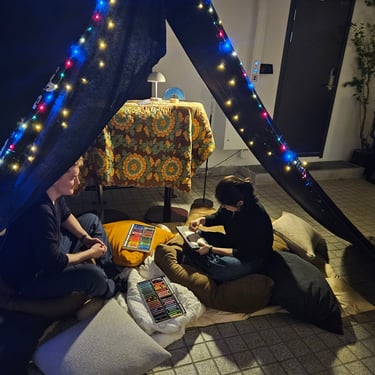
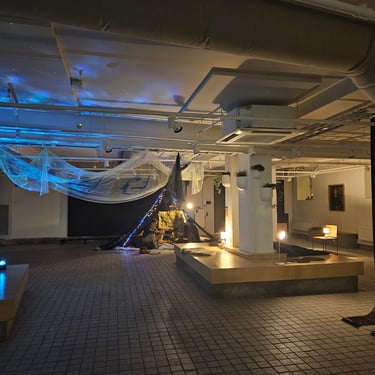
The installation consists of layered textiles, textile collages, and immersive painted spaces that visitors can move through, touch, and experience physically. Conceived as a metaphorical playground, the work invites the hidden child within each of us to reappear. The title Hide and Seek reflects both the innocence of childhood play and the concealment of traumatic memory.
Throughout the process, the collaboration has also been therapeutic for us. Through creation, we have confronted our wounds and supported one another. This personal experience informs our ambition for the audience: that they, too, might encounter their own inner child—not directly or prescriptively, but through metaphor, atmosphere, and sensory immersion.
Opening in December 2025, the exhibition will include public conversations between the artists, the psychologist, and visitors, underscoring its interdisciplinary foundation. Hide and Seek contributes to an ongoing cultural dialogue about trauma, healing, and childhood—offering art as a space where silence becomes visible and vulnerability can be shared.
Artistic Goal
The goal of Hide and Seek is to create an installation where trauma and the inner child can be explored through artistic metaphor, play, and participation. We are guided by the belief that art can reveal what psychology describes but cannot embody, while psychology can deepen the meaning and reflection within art.
Our objectives are threefold:
Transform private experience into universal metaphor.
We aim to translate personal struggles into an aesthetic language of fabric, paint, and space that invites audiences to recognize their own inner child—without explicit narrative or instruction.Create an interactive environment.
The installation engages the senses as well as the mind. Visitors are encouraged to move within the space, touch materials, and experience art as something immersive and personal.Build a dialogue between art and psychology.
The project demonstrates how the two practices can meet without merging. Art provides form and metaphor; psychology offers insight and reflection. Together, they create an installation that is emotionally resonant and culturally relevant.
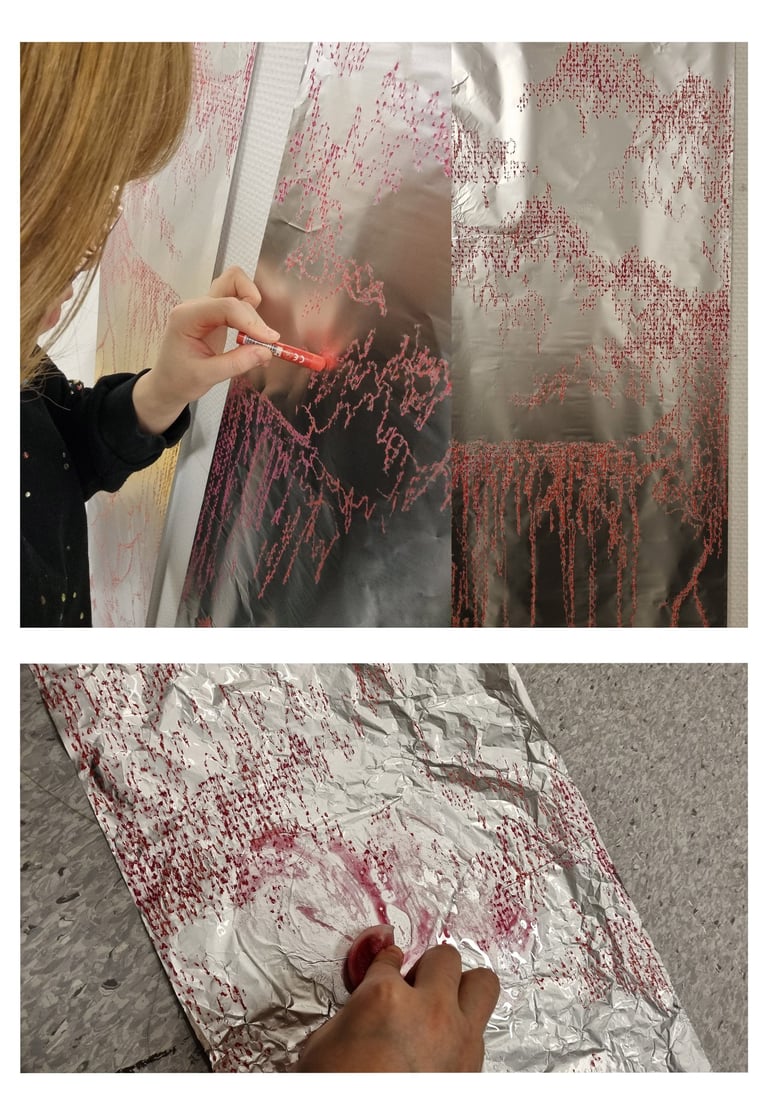
Torbjørn contributes as both psychologist and visual creator, using oil pastel carving techniques to explore his own mental struggles. For him, the project is a non-verbal outlet for expression and a way to engage the public with psychological knowledge. While Hide and Seek does not aim to provide therapy in a clinical sense, it extends the healing potential of art through metaphor and participation.
For me as an artist, the collaboration has brought psychological depth to my own experiences of trauma. The project is thus both creative and therapeutic—Torbjørn’s healing process unfolds through artistic creation, while his insights enrich the visual and spatial realization that I lead.
Ultimately, Hide and Seek is a personal journey offered to others. By engaging our own inner children through art-making, we invite audiences to do the same through experience. The project shows how interdisciplinary collaboration can expand contemporary art’s capacity to hold vulnerability, foster dialogue, and invite transformation.
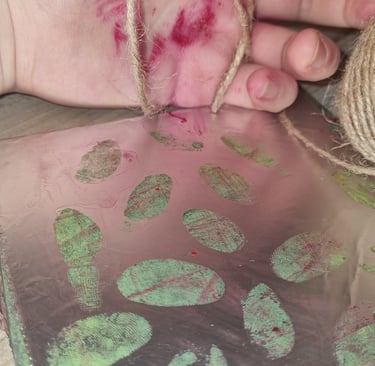
VIOLENT GREEN
Violent Green
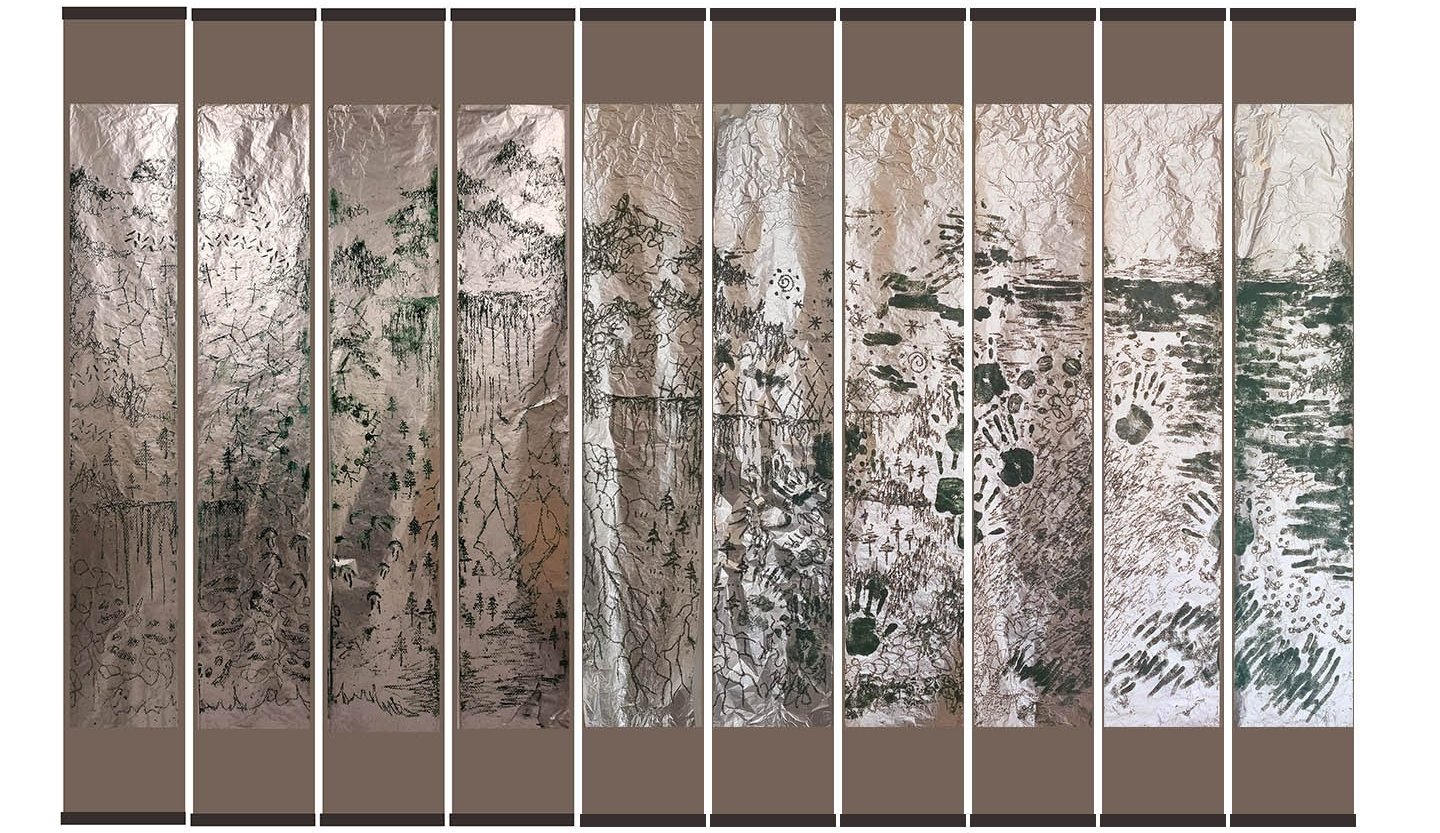
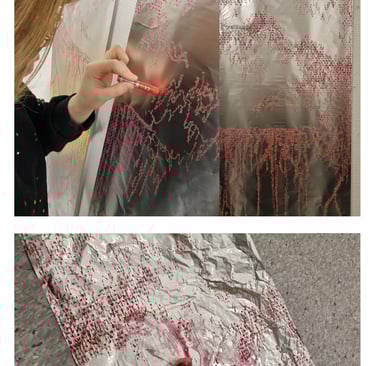
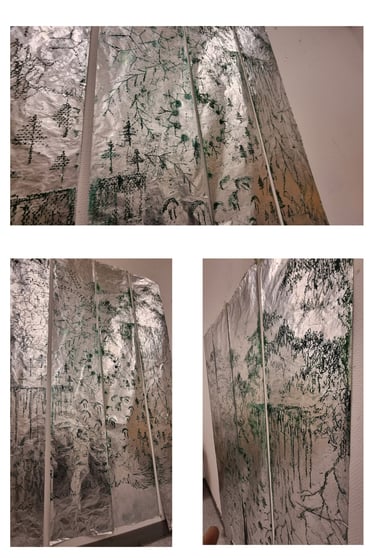
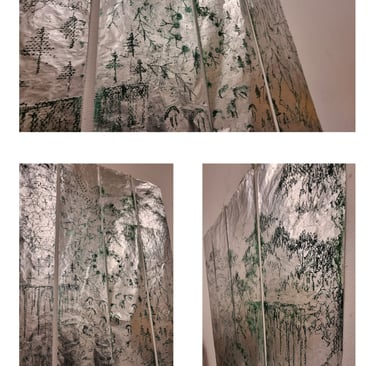
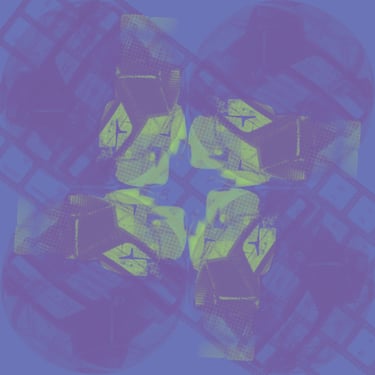
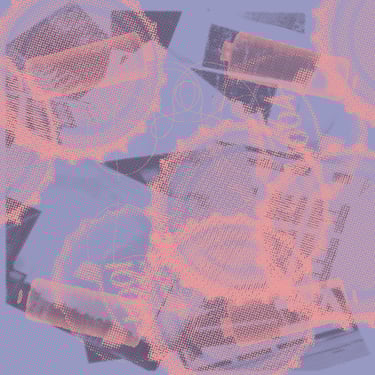
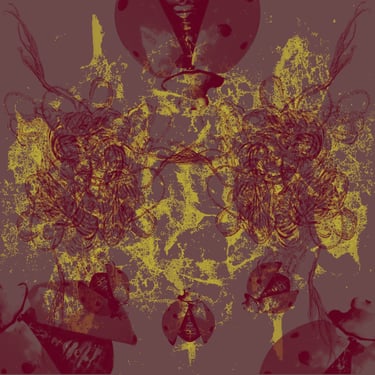
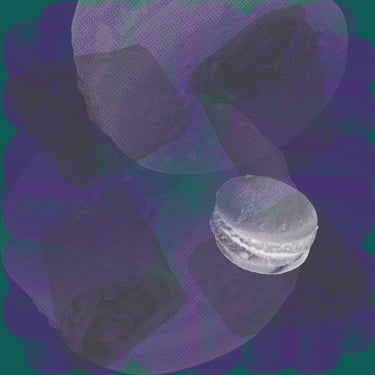
30 X 120 cm each
Panorama structure
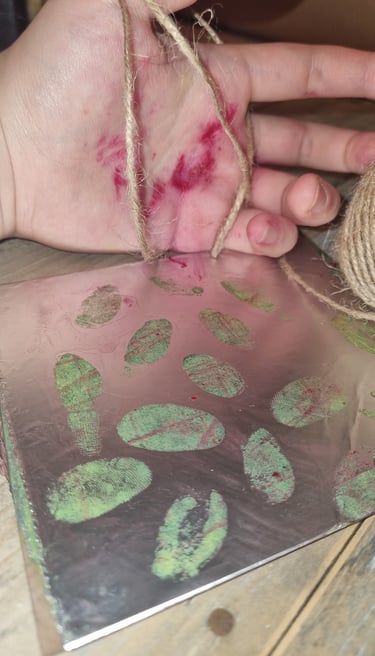
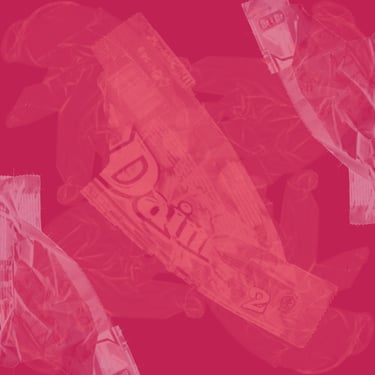
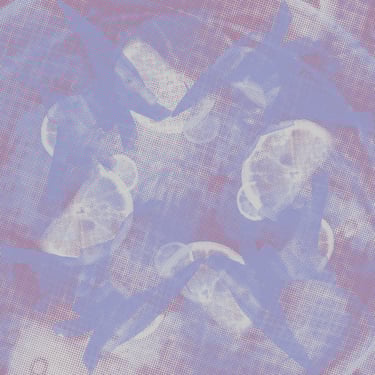
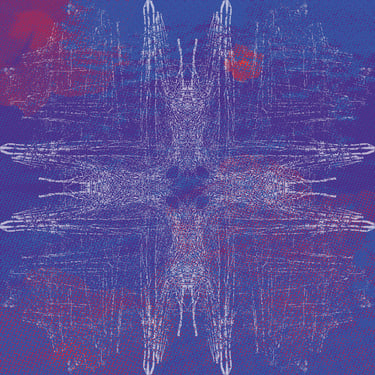
Lithography on aluminum foil
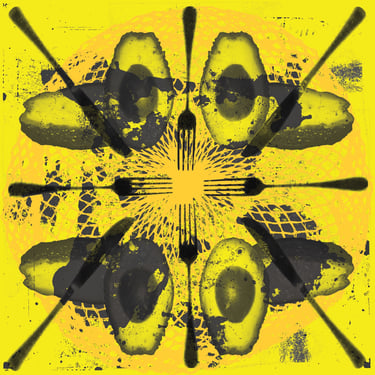
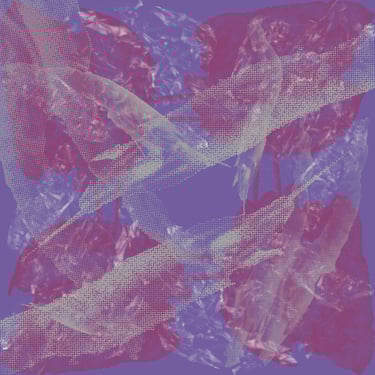
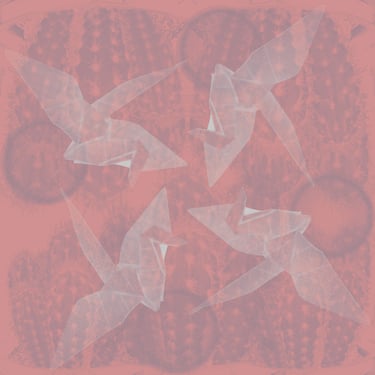
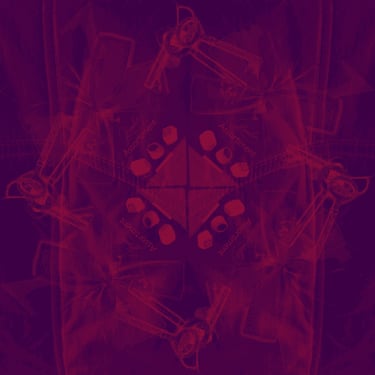
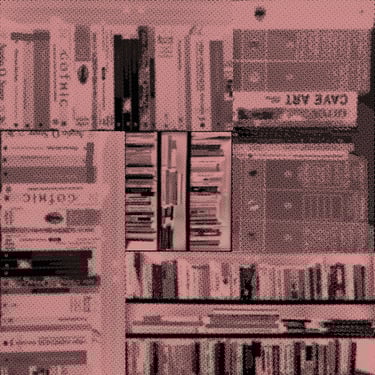
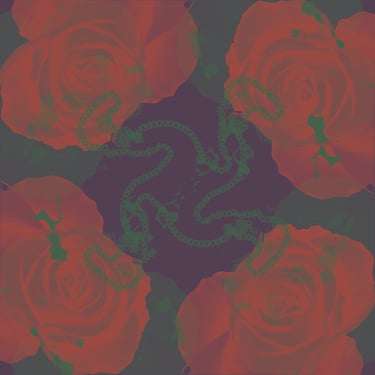
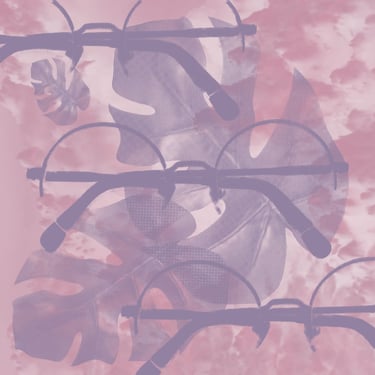
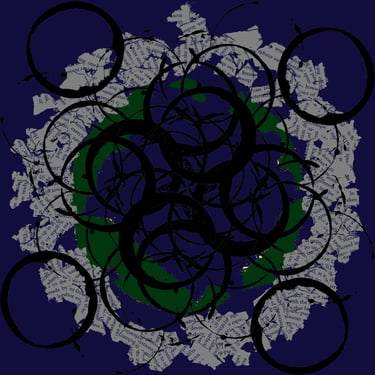
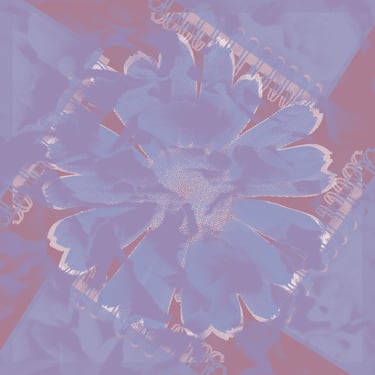
Climate change is one of the most important crises in the current generation of humanity. However, most of the institutional approach toward climate issues are performed under the capitalistic non-indigenous perspectives by national authorities. In this context, indigenous perspectives and backgrounds are generally less prioritized compared to the majority of society. Many of indigenous people in different society have been losing their own right or their environment and culture on the process of climate action from nation authorities.
The project <Violent Green> will discuss about indigenous life related to climate colonialism in Indigenous society. The main motivation of <Violent Green> is the Sustainable Development Goal from United Nation and Fosen-saken that happened from 2nd of March 2023. Since I have started studying in master's course in the art academy of Tromsø, I have gotten new insight about the indigenous culture and their status in the major national groups. According to the report from the Department of Economic and Social Affairs in United Nation, Indigenous peoples are among the first to face the direct consequences of climate change.
Based on my experience when I was studying in the first year of master's course in indigenous study, I am reflecting my observative perspectives on my project. I will visualize the esthetics of nature and environment that are backgrounds for several indigenous groups in the world – the esthetics will not represent the indigenous culture, but only their locational background. Furthermore, the main materials to be used for this project are leftover coca cola and cooking oil, and aluminum foil, which will less contribute to global warming. The main technique for this project is both manual printmaking techniques and digital print technique to suggest the contrast between indigenous groups and major social groups. The goal of this project is to introduce ongoing crises from the real cases of indigenous people behind the majority perspectives of society related to climate issues.
This is a quantity-based work. I am aiming to include my own reflection on the cases where indigenous people’s right of their own environment due to the national authorities’ legacies for global climate change was jeopardized. Starting with the case studies including Sami (Norway), Nenets (Siberia), and Inuvialuit (North-East Canadian coast), the project will be extended with more case studies from different indigenous groups in different backgrounds. The work is not going to fucus merely on Sami groups in Tromsø, but also on the general unequal status of indigenous people's life in current generation.
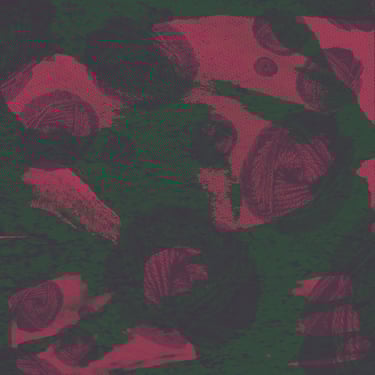
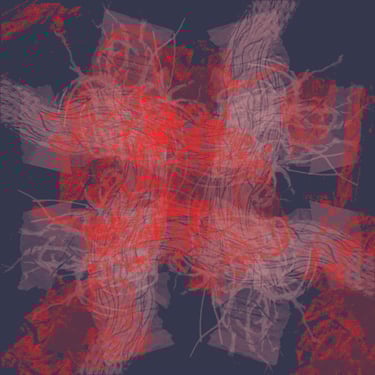
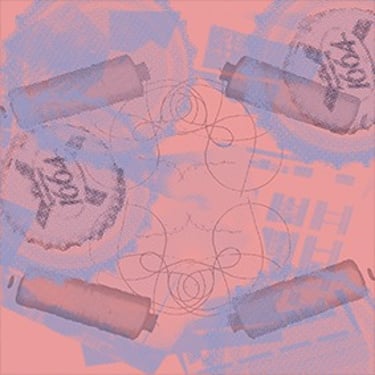
Hakkyung Son Color, the memory of sadism
2020 ~ present
Digital print, graphic tool
This project is the expression of my compassion for this society based on my personal experience as an Asian woman who is living in this western society. There is obvious hierarchy among human beings based on the color, which is so called “ethnic background.” All individual people have their own biological color, and I would like to present every single member of society through my work. Simply, I test the best color to match with the individual participants’ skin color, and make a portrait without human figures, but with objects which remind me of that specific person.
From a distance, we are all nothing. We are nothing as a person whoever from wherever in a crowd of people. Outside of the planet, individuality is meaningless like in a group of ants (ants are actually super important but you know what I mean, come on!). This work is quantity-based work; it is planned to have tons of examples, as much as possible so that it can seem like our human society with a variety of peoples.
Personal color project Step
1. - Testing personal color of people. Step
2. - Making portrait images, using the color that was tested in the previous step. Step
3. - Gift giving from me to them. Step
4. - Interviewing after granting the gift.
Then comes the time for having a roleplay. This is an agreement of relationship between me and the subject. I am pleased to let people be under my control. I will analyze people’s skin color and attempt to replicate it with the color system that is organized by me. Everything will be analyzed, including your color with my way of testing you. Everyone’s identity in their own portrait is going to be decided by my judgement. They need to accept all the way they have been defined by me and they will put my judgement nearby their neck and face. After all, I will give them a chance to talk about their feelings. Still, I cannot promise that I am as considerable as their expectation.
There are several examples in which a similar or same color result was achieved, even though the participants had different ethnic backgrounds. The biggest difference of biological color of a human being’s skin is up to the combination of yellow(melanin), red(artery), and green(vein). The balance of these three elements of the skin is different for every single person in the world, but it does/should not represent the hierarchy of the individuals. If there is anybody who looks good with red color, that means the person’s skin colors are more balanced with red reflection because the person does not have strong arteries featured on the skin. On the contrary, reflection from green color can make color balance on the skin tone if somebody has a blushed face. So, let’s not overreact to skin color and let us stop asking people where you "really" are from.
MEMORIAL MORTIES
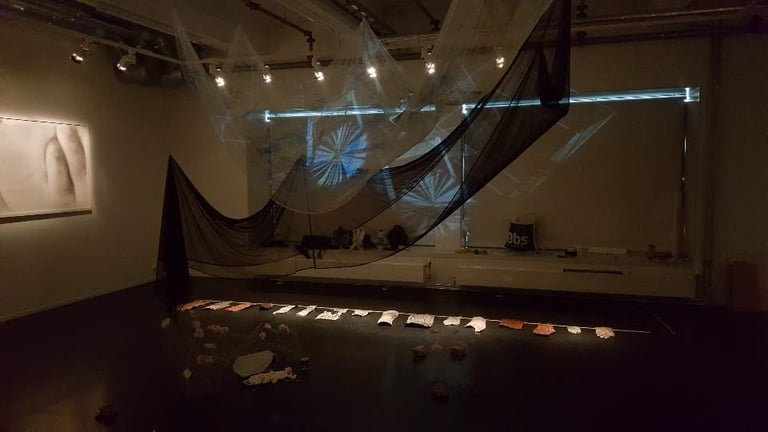
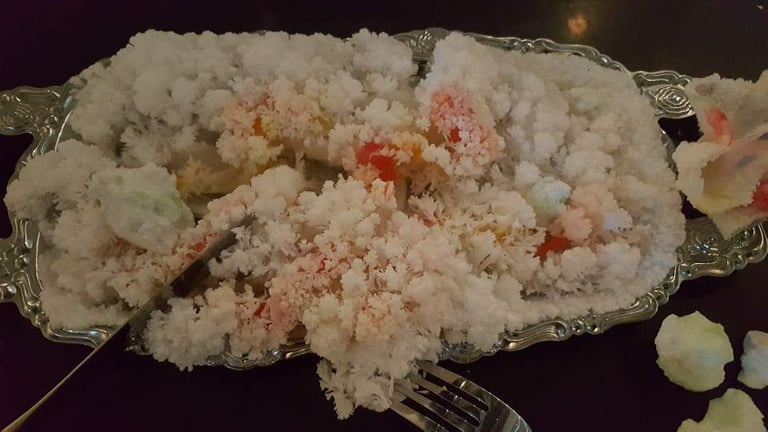
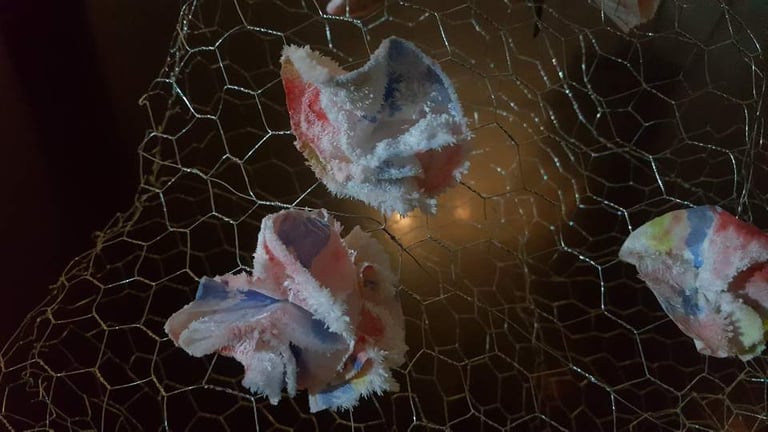
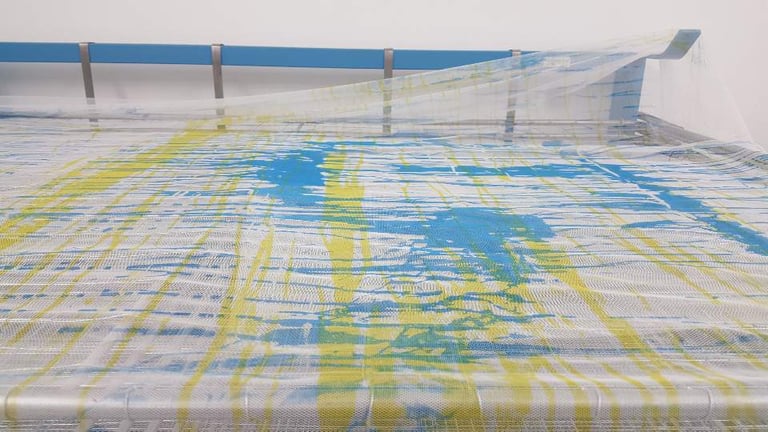
MEMORIAL MORTIES (10.2019 Tromsø, Norway)
INSTALLATION - PRINTED IMAGES ON FABRIC, CHRISTAL FROM UREA FERTILIZER VIDEO WORK FROM THE MOTH PATROL
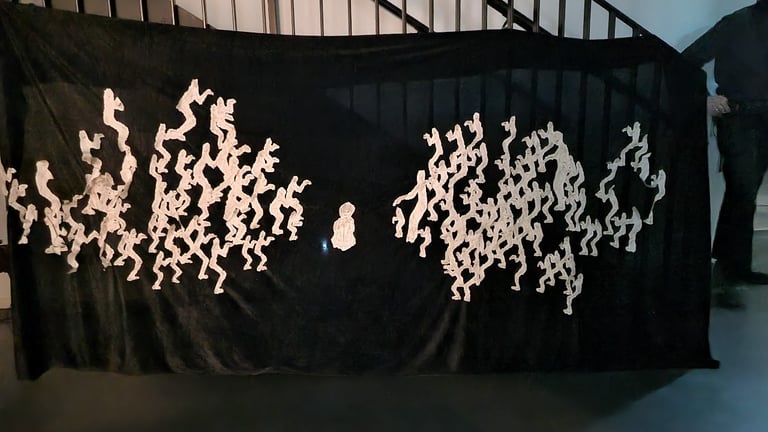
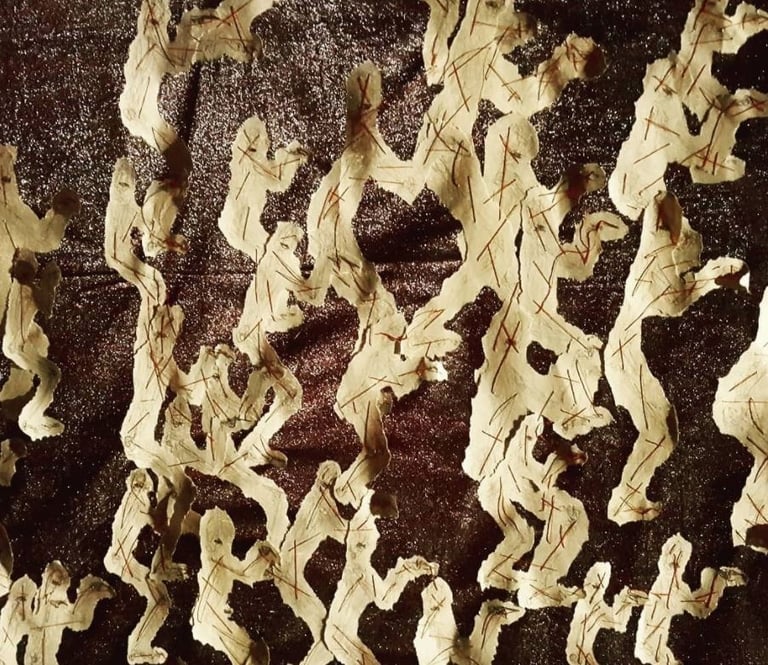
HAKKYUNG SON(1993, South Korea, instagram : sohnakk ) & THE MOTH PATROL(Singapore, www.mothpatrol.com) Memoriale Mortis is a collaboration between Hakkyung Son and Moth Patrol. The installation opens a dialogue that centers around the grey area between life and death, with each artist bringing their interpretation to the work.
"We miss a lot of things that are flowing away. You have to see everything running on you. Don't try to grab water in your hands; you should dive into it. I'm sure your clothes weren't wet in your plan. But the mess of the liquids creates memories, leaving your trace. Everyone knows that death is coming. Imagine what it would look like to wipe the traces of your clothes with your old soul."
- Hakkyung Son
"When energy disperses, it is displaced beyond the range of human perception. It is lost forever, but it can never truly disappear. This dissipation inspires the projection for Memoriale Mortis, which combines intentional visual techniques and chance-based imagery generated by the sounds the piece heard inside the exhibition space. This is where I seek to find a point of convergence between the pseudo-random interactions of imagination and the stillness of the material."
- The Moth Patrol
A LOT OF NOBODIES
A LOT OF NOBODIES (12.2019 Tromsø, Norway)
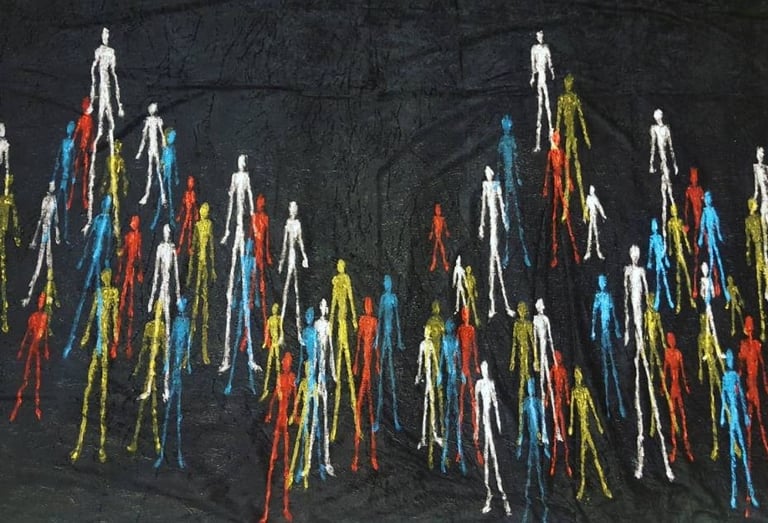
Hallucination is surrounding us. The figure of what we used to believe about the things that we are seeing correctly might not be an implicit fact. We as a human being know the all different superficial characteristics among each others. The human being who are having two legs, two arms, faces, and certain proportion of their bodies might be just our hallucination.
The magnetic environment in this far north makes people easier to approach another part of the nature. The part that we may can experience here would be not so persuasive to others but it is surely existing, just like the Northern Light which has not been figured out the scientific reason how it is happening so far.
Hallucination is commonly believed as a part of truth my the people who were getting through in the moment. The motivation of this work is based on the personal experience from my past. The illusion of of human figure was not the same as what so ever that I used to see. For sure those were keeping on approaching me with their aggressive curiosities and I was exhausting myself with what I was believing in the moment.
PRINTMAKING WORKS
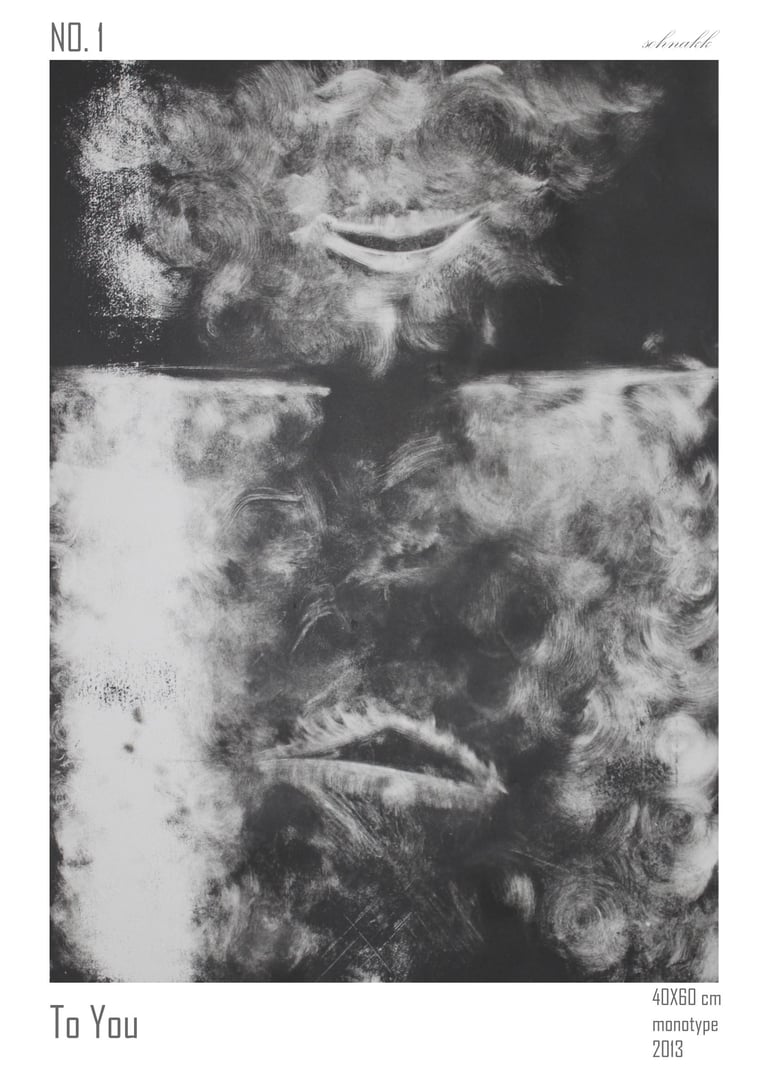
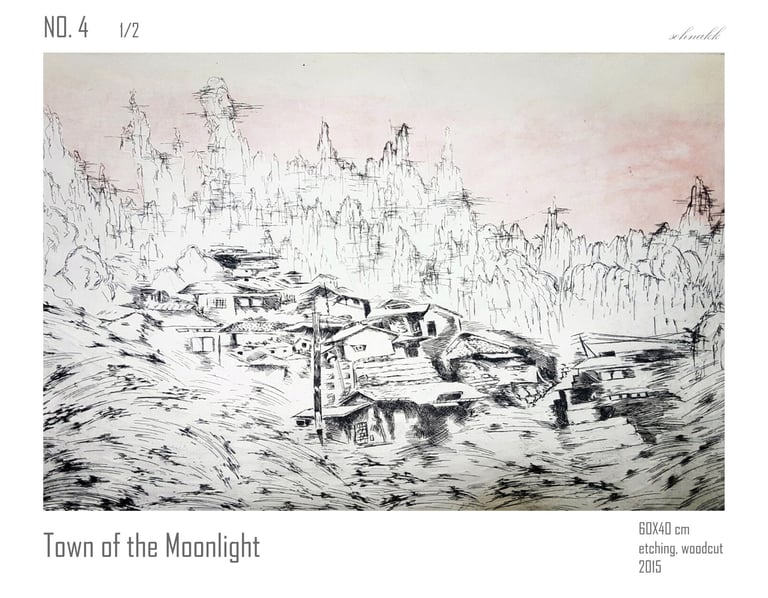
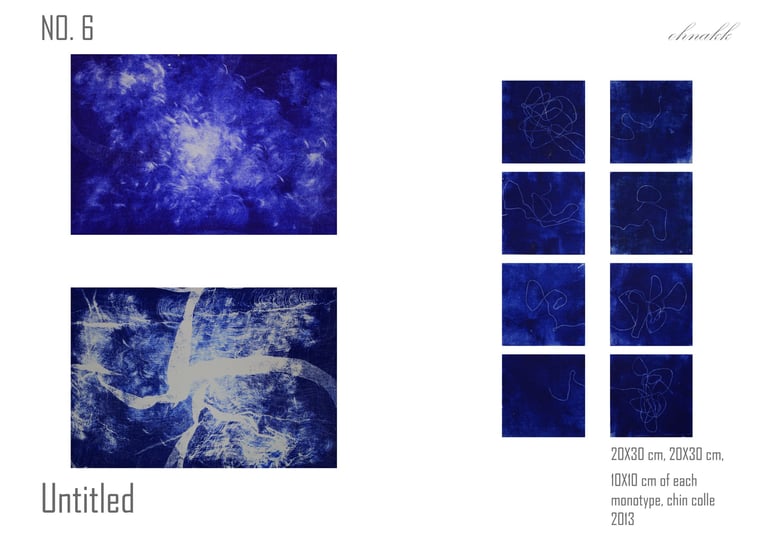
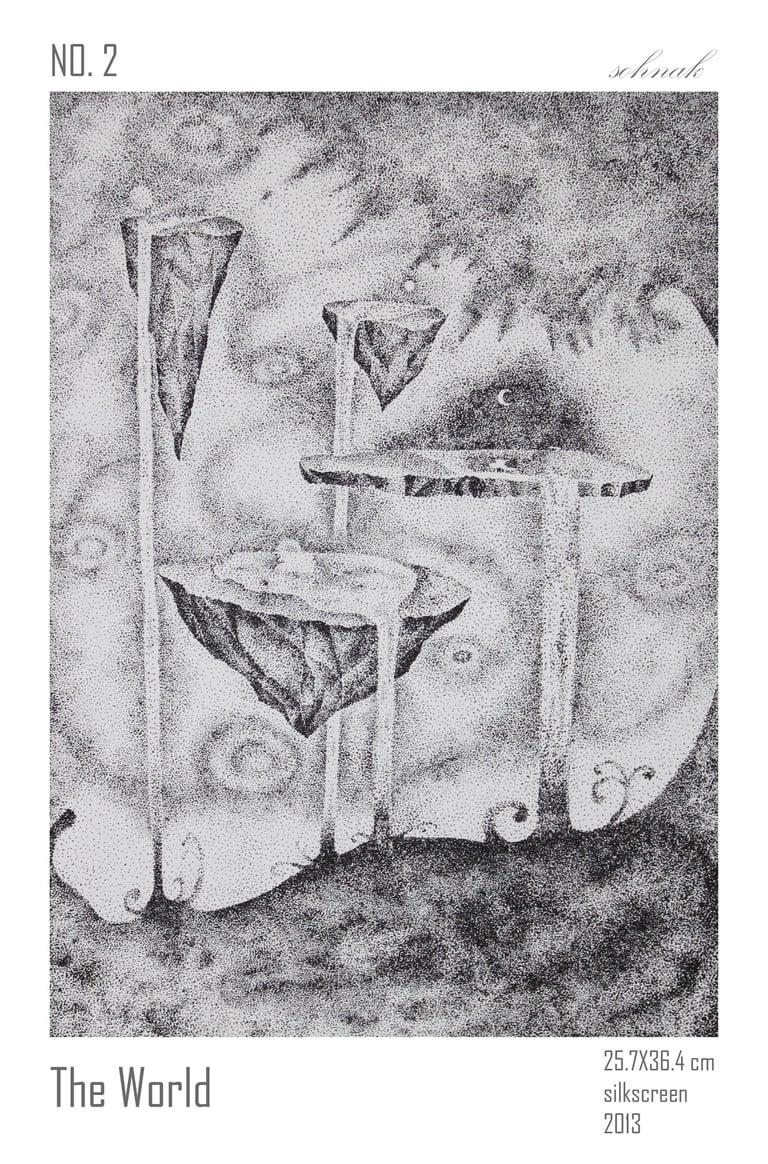
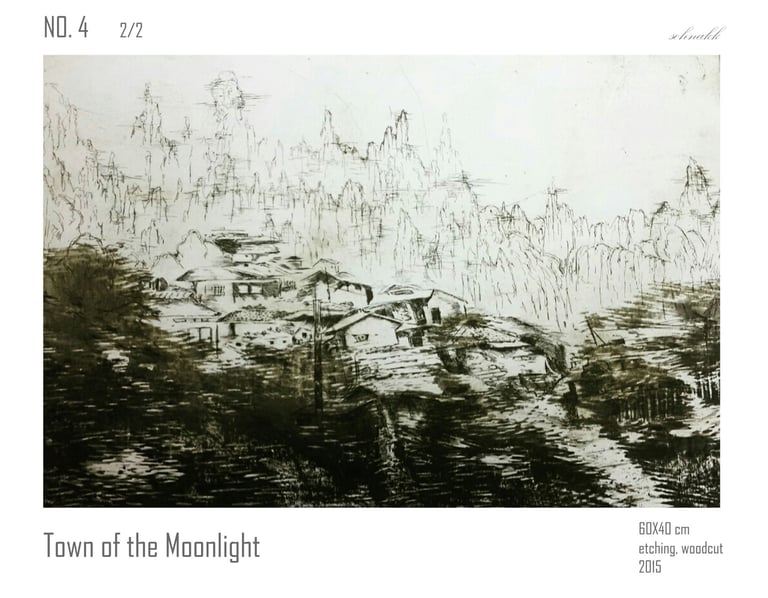
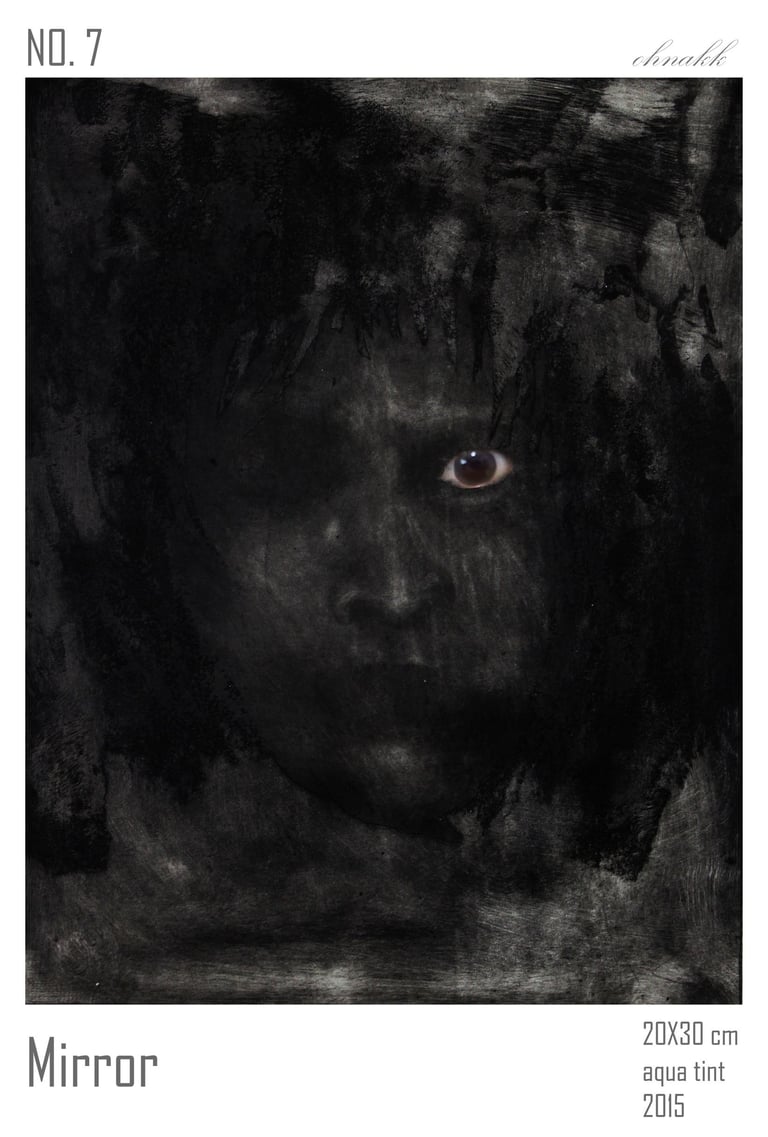
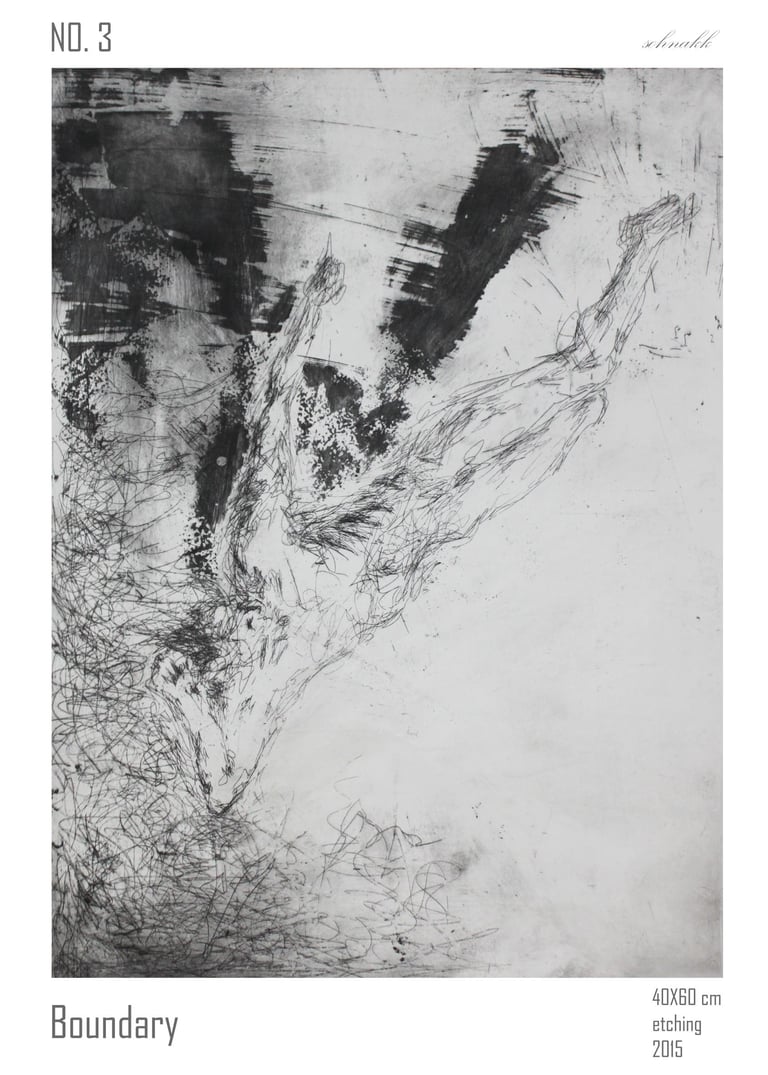
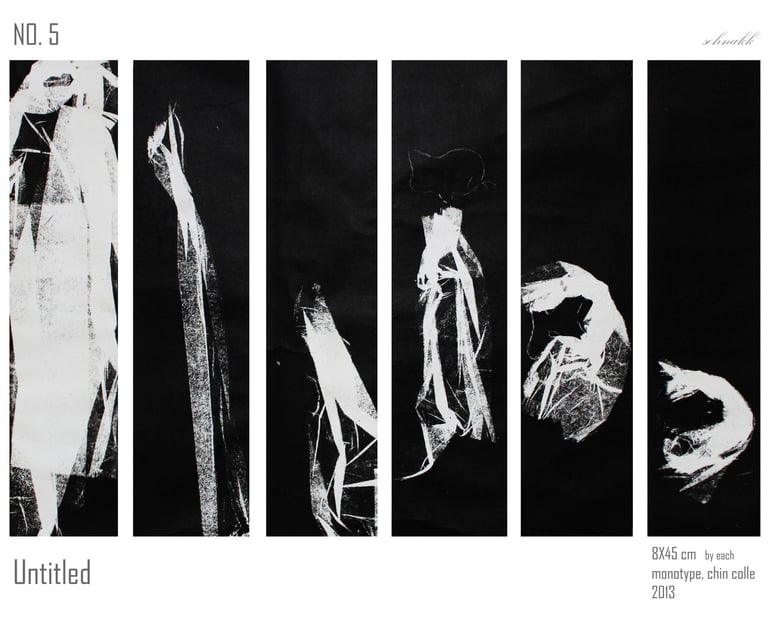
ILLUSTRATION WORKS